
Team

Marian-Gabriel Hâncean, PhD
Marian-Gabriel Hâncean (he/him) is a mixed-methods sociologist specializing in computational social sciences with a strong focus on statistical modeling and network analysis. His research integrates methodologies from sociology, data science, and computer science to analyze human behavior through the detection and analysis of complex network patterns. He employs network science and computational sociology to explore the interplay between network structures, social selection, and social influence. Recently, his work has focused on applying advanced computational models, such as Relational Hyperevent Models (RHEM), to study phenomena like virus spreading in socio-centric networks, patterns of scientific collaboration, and the science of team science. His research combines theoretical and computational approaches to examine the mutual dynamics between relational event data (social interactions) and relational states (social structures), providing insights into areas such as epidemiology and public health. His current projects involve computational analyses of cancer and cardiovascular risk factors within panel personal network data observed in different living labs. His work underlines a multidisciplinary approach, bridging the gap between computational methods in social sciences and traditional network analysis techniques, and contributes to the broader field of computer science by developing models applicable in areas like public health, organizational studies, and collaborative networks.

Bianca Elena Mihăilă, PhD
MIHĂILĂ, BIANCA-ELENA is a faculty member in the Department of Sociology at the University of Bucharest and holds a PhD in Sociology. Her research combines social network analysis, quantitative methodology, and social statistics to investigate how individual behaviors and outcomes are shaped by relational and organizational contexts. Her doctoral research examined the evolving relationship between science and public health policy, with particular attention to the COVID-19 pandemic. Her research agenda focuses on applying network-analytic methods to public health and other complex social processes. Her research interests include personal and social networks, health behaviors, migration and transnational networks, organizational processes, and scientometrics. Her recent work within the 4P-CAN project uses longitudinal personal-network data and quantitative methods to examine the relational patterning of cancer and cardiovascular risk factors, including how health-related behaviors and attitudes cluster and evolve within personal networks. More broadly, her research seeks to translate relational evidence into a better understanding of the social mechanisms underlying health and other behavioral outcomes.

Iulian Oană, PhD
OANĂ, IULIAN, PhD, is a network data scientist & quantitative sociologist at The Center for Advanced Studies in Organizations and Complex Networks (GraphNets), an interdisciplinary research entity embedded in the University of Bucharest (UB). He also serves as a teaching assistant for the courses 'Methods of Sociological Research' and 'Social Networks', and as a researcher at the Bureau of Statistics (at UB). He received his PhD from UB in 2021, for a thesis employing semantic network analysis in studying the evolution of research topics inside the field of Social Network Analysis. In general, he finds fascinating any application of network science methods to the study of social phenomena. Currently, he is working as a researcher in the 4P-CAN project, where, together with the project team, he applies personal network analysis for the understating of health opinions and behaviors of persons inside a living lab, to better public health policies regarding cancer and cardiovascular risk factors.

Bogdan-Adrian Vidrașcu
VIDRAȘCU, BOGDAN-ADRIAN is a PhD candidate at the Faculty of Sociology and Social Work, University of Bucharest. His preferred approach lies within the frame of quantitative methods, with an emphasis on social network analysis. His main area of interest is related to the examination of the structures underlying the development of shared systems of belief and action within both real-life and online communities. He has previously studied the presence of assortativity within the political discussion networks of Romanian voters in the context of the 2019 Europarliamentary vote. He is currently interested in the impact of social networks on an individual's behaviours like sleep or physical activity which are associated with cardiovascular risk.
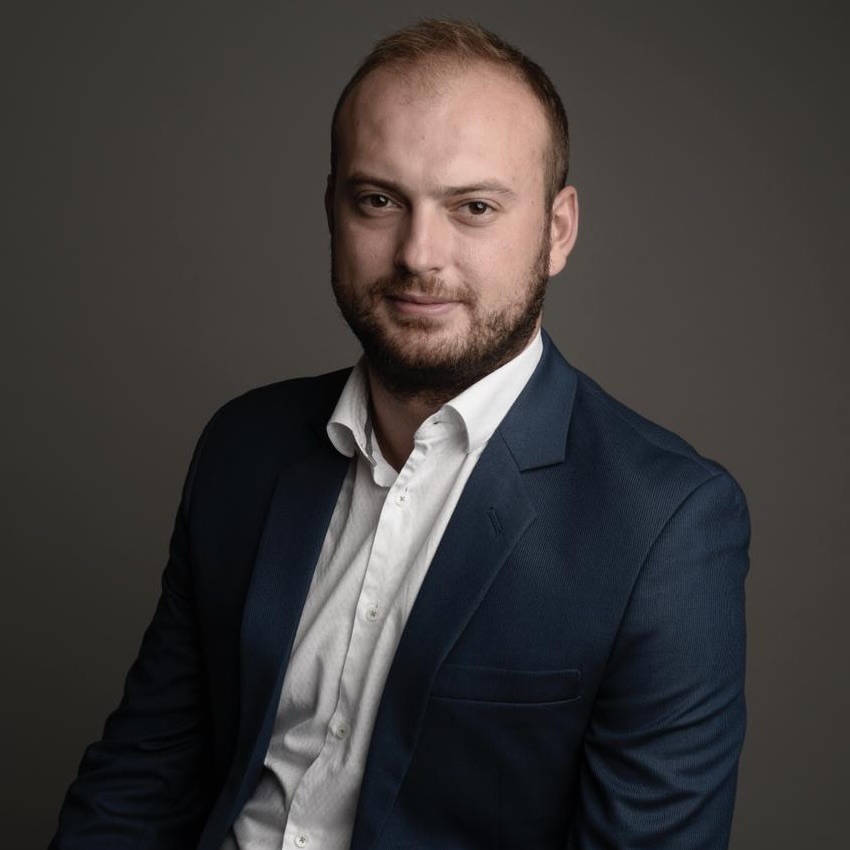
Victor Solomon
SOLOMON, VICTOR is a PhD candidate at the Interdisciplinary School of Doctoral Studies, at the University of Bucharest. He holds a Bachelor of Arts in Sociology from the University of Bucharest, a Bachelor of Science from the University Politehnica of Bucharest, and a Master of Science in Management of Technology from ETH Zurich. Over the past eight years, he has worked in the blockchain space, taking on various roles in product management, operations, and analysis. Currently, he is pursuing a Ph.D. in interdisciplinary studies, focusing on sociology and social network analysis in the blockchain space. His research interests include understanding user behavior in the blockchain space, utilizing experiments as a research method, and applying social network analysis to study blockchain ecosystems.
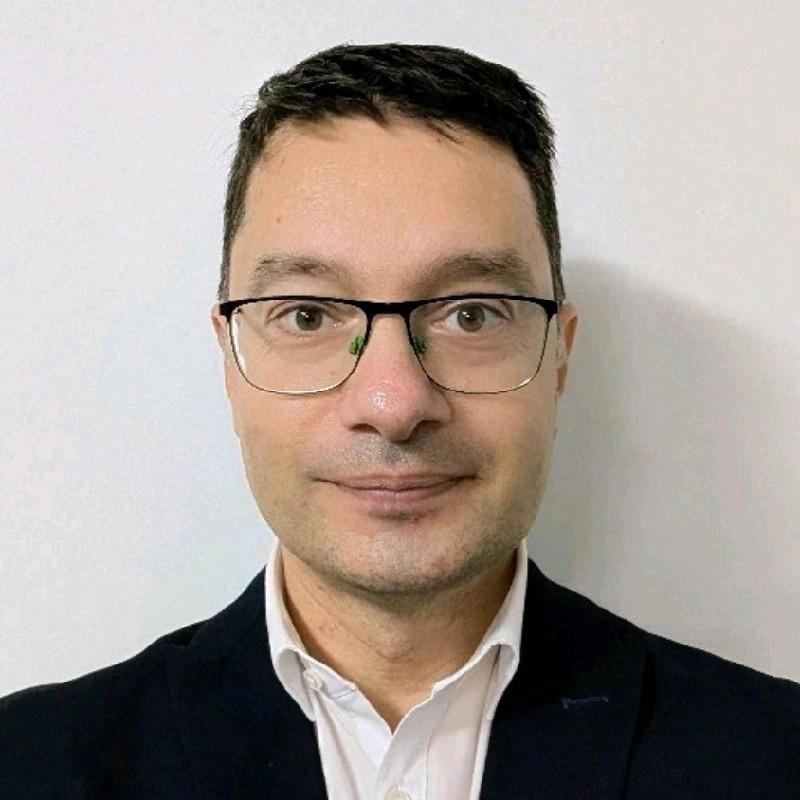
Marius Neagu
NEAGU, MARIUS is a PhD candidate at the Interdisciplinary School of Doctoral Studies, University of Bucharest. He holds Bachelor's and Master's degrees in Political Science and brings nearly two decades of professional experience in official statistics, with expertise in data quality, statistical data processing, and automated data workflows. His doctoral research examines the reciprocal relationship between social structures and individual behaviour through social network analysis and quantitative methods, situating these processes within a broader socio-technical systems perspective. His research interests include social networks, migration, political and social behaviour, computational social science, and the use of large-scale and administrative data to analyse complex social processes.

Nicola Sannazzaro
SANNAZZARO, NICOLA holds a Master’s degree in Human Rights and Conflict Management from the Sant’Anna School of Advanced Studies and a Master’s degree in Law from the University of Milan. He is an independent child protection and social policy consultant with over 12 years of professional experience working with UNICEF and government counterparts across Europe, Africa, Asia, and Central America. His work combines policy analysis, mixed-methods research, and evidence generation on child protection systems, alternative care, prevention of family separation, violence against children, and migration. He is particularly interested in how relationships and collaboration between institutions, services, and professionals shape the effectiveness of child protection and social welfare systems.

Maria-Alexandra Roșu
ROȘU, MARIA-ALEXANDRA is a first-year MA student in the Research in Sociology in the Sociology in English program at the University of Bucharest. Currently, she is working as a researcher on the 4P-CAN project, which focuses on cancer and cardiovascular risk factors. In collaboration with the project team, Maria applies personal network analysis to better understand the health opinions and behaviors of individuals within a living lab environment. This research aims to improve public health policies by providing deeper insights into how health outcomes spread through personal networks, contributing to more tailored and effective approaches to cancer and cardiovascular health.

Andreea-Ștefania Moise
MOISE, ANDREEA-ȘTEFANIA holds a Bachelor's degree in Sociology, with a specialization in Organizational Management and Marketing. Her undergraduate thesis examined the visibility of the pink tax among young individuals, with a particular focus on student consumers. She is currently pursuing a Master's degree in Sociological Research at the Faculty of Sociology and Social Work, University of Bucharest. Her academic interests lie at the intersection of equity, equality, and social inclusion, as well as in the ways digital data and advertising influence contemporary social behavior. Through her work, she seeks to better understand how structural inequalities are reproduced within digital and consumer cultures.
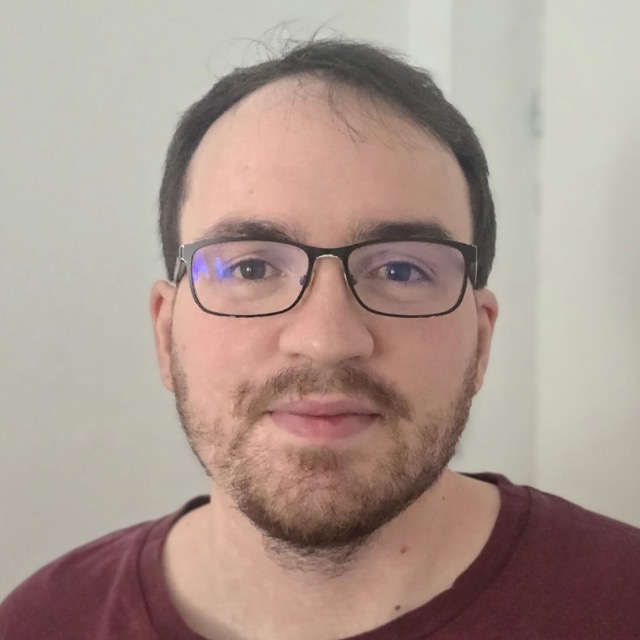
Antonin Tron-Lozai
TRON-LOZAI, ANTONIN is a first-year MA student in the Research in Sociology program at the Faculty of Sociology. A French national, Antonin has discovered his deep interest in sociology upon moving to Romania, whilst navigating the unspoken codes and customs of a so similar, yet different society, with its own realities and challenges. Antonin's main academic interests lay in quantitative data analysis and the epistemology and ethics of scientific research. Currently, he is involved as a researcher in the 4P-CAN project, which investigates cancer and cardiovascular risk factors through personal network analysis.

Răzvan Zaharia
ZAHARIA, RĂZVAN is a third-year BA student at the University of Bucharest, with research interests in social network analysis, spatial analysis, and quantitative methodology. His current work explores the integration of geographical information with relational data and the development of spatially sensitive measures of social and health inequalities. He is currently constructing a multidimensional Health Index for Romania using principal component analysis (PCA) to identify spatial disparities in healthcare access, with subsequent extension to the European level. He also contributes to research on the global network of twin-city partnerships, applying network-analytic methods to examine the structure, geographical distribution, and cross-national patterning of intermunicipal ties.